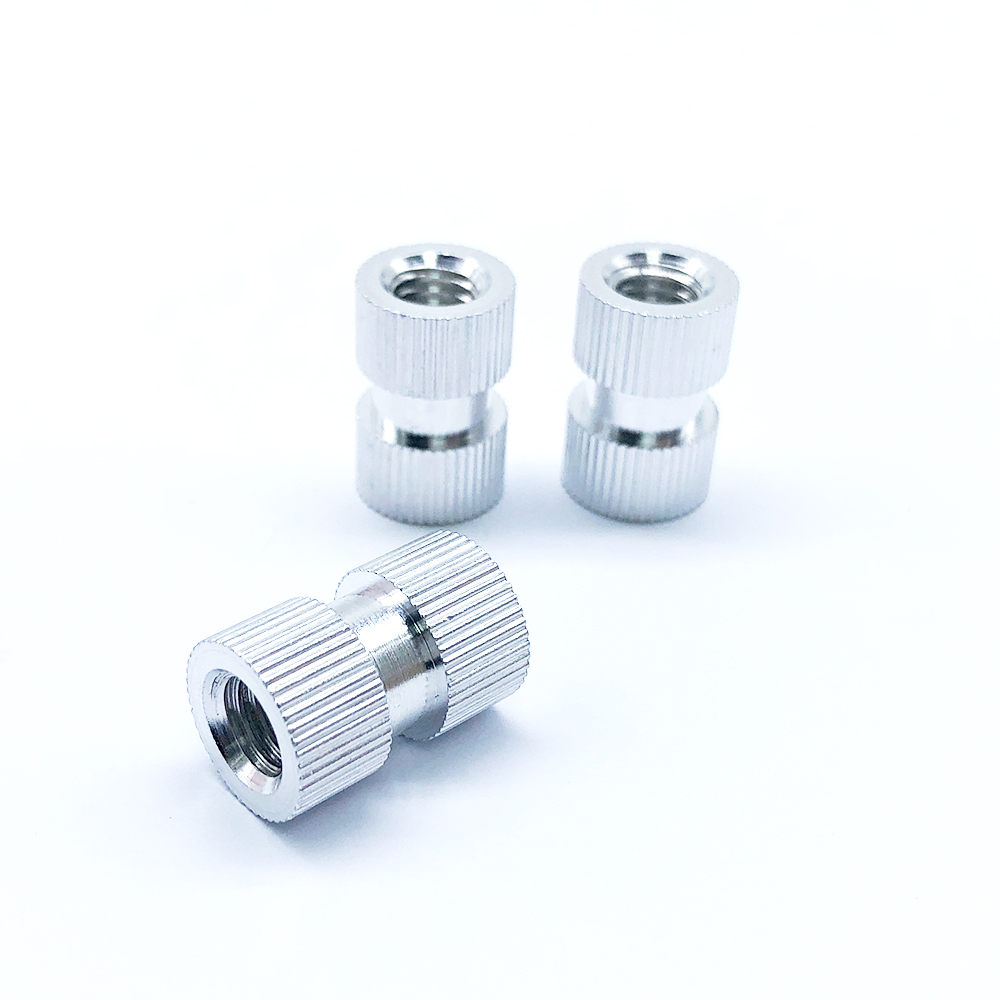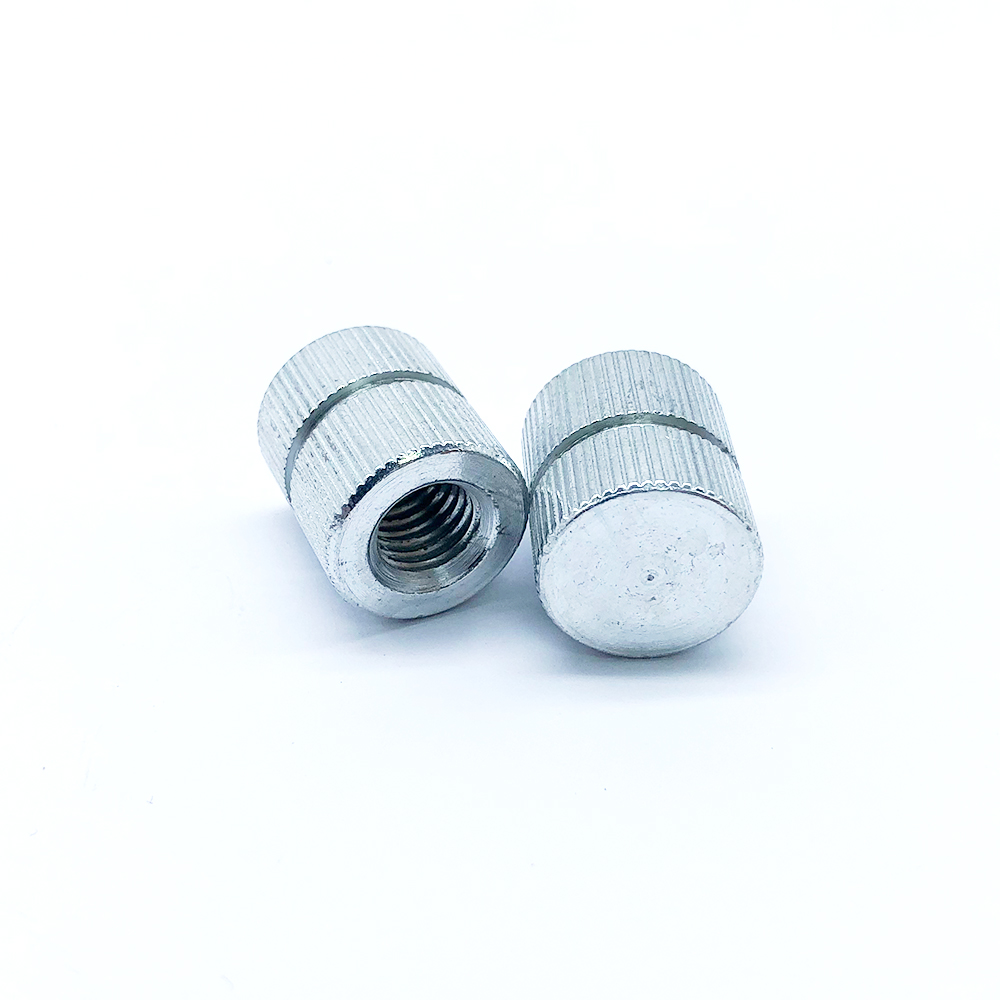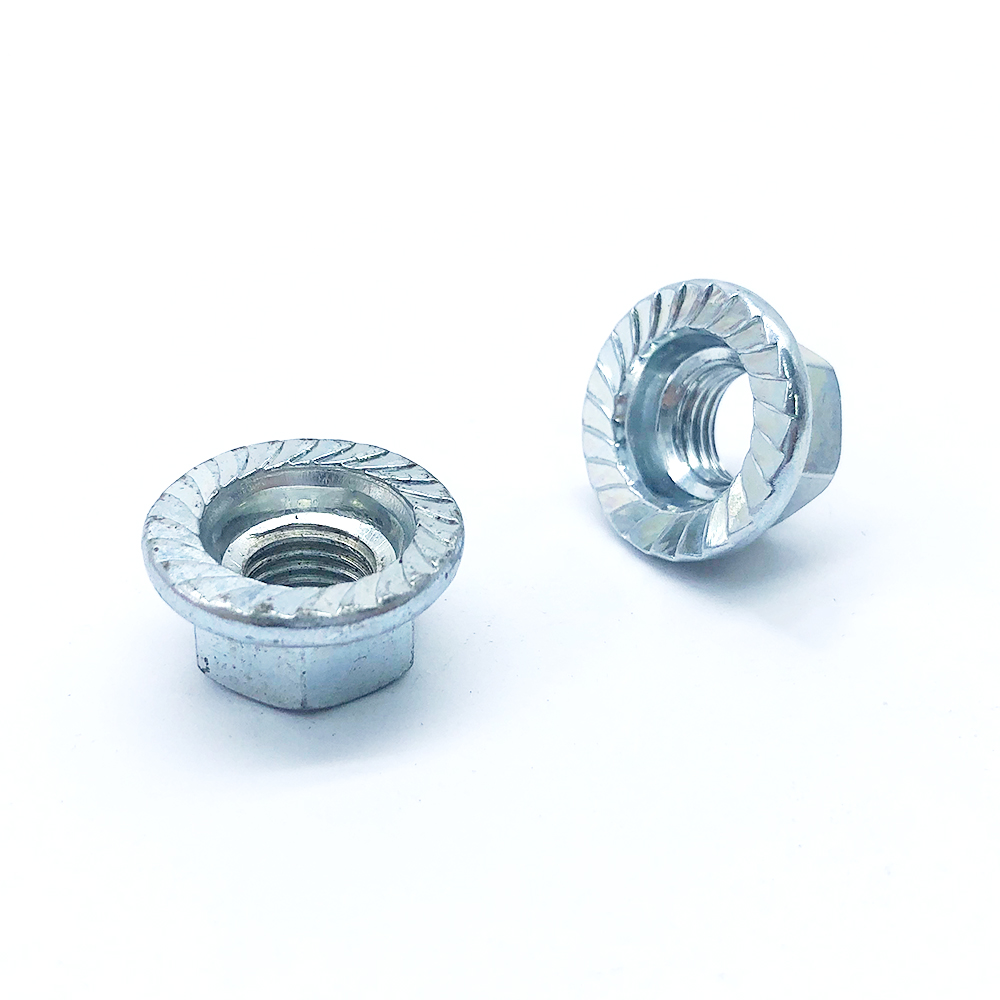
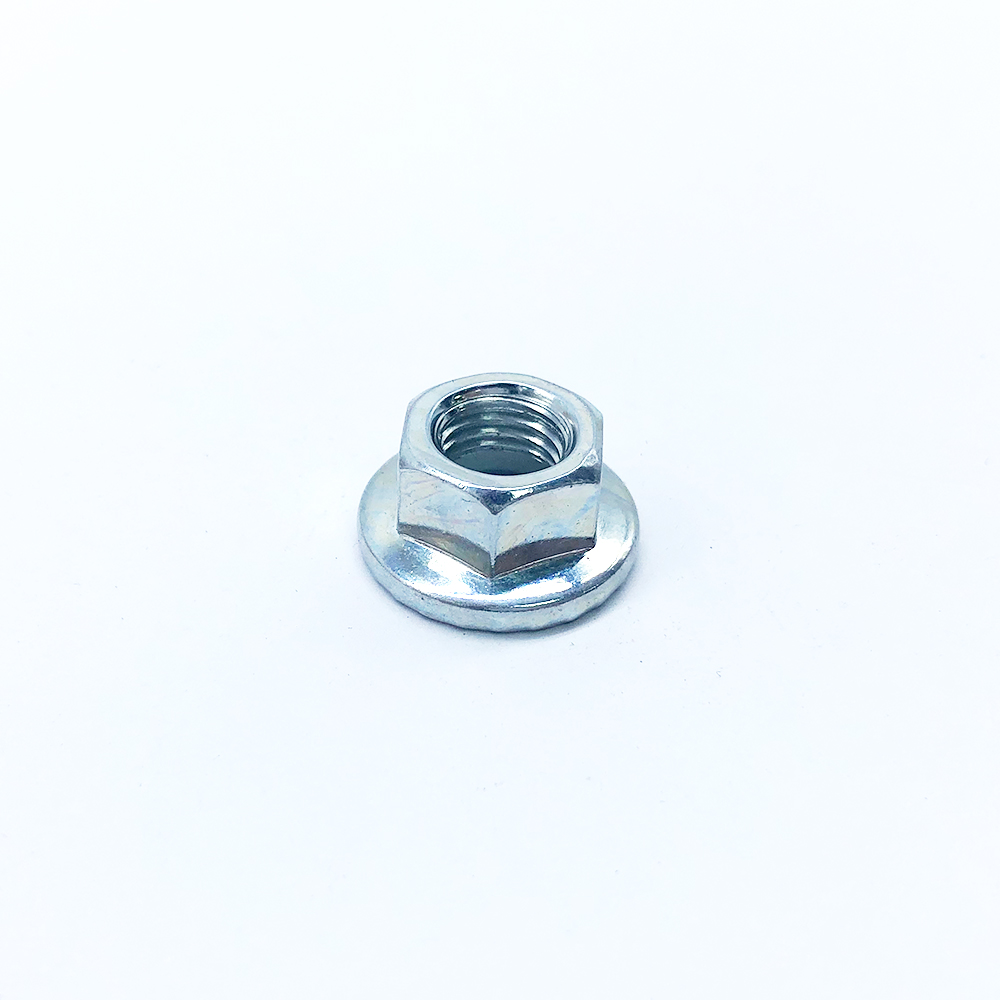
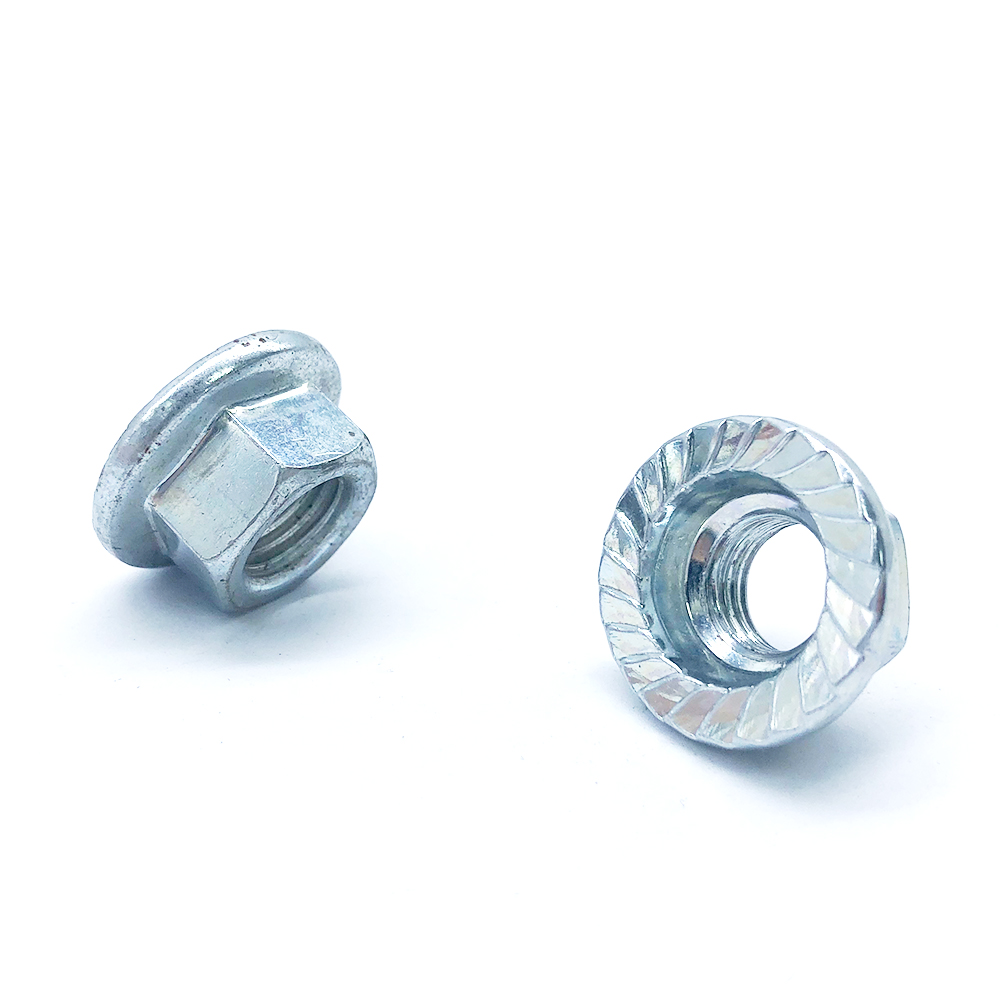
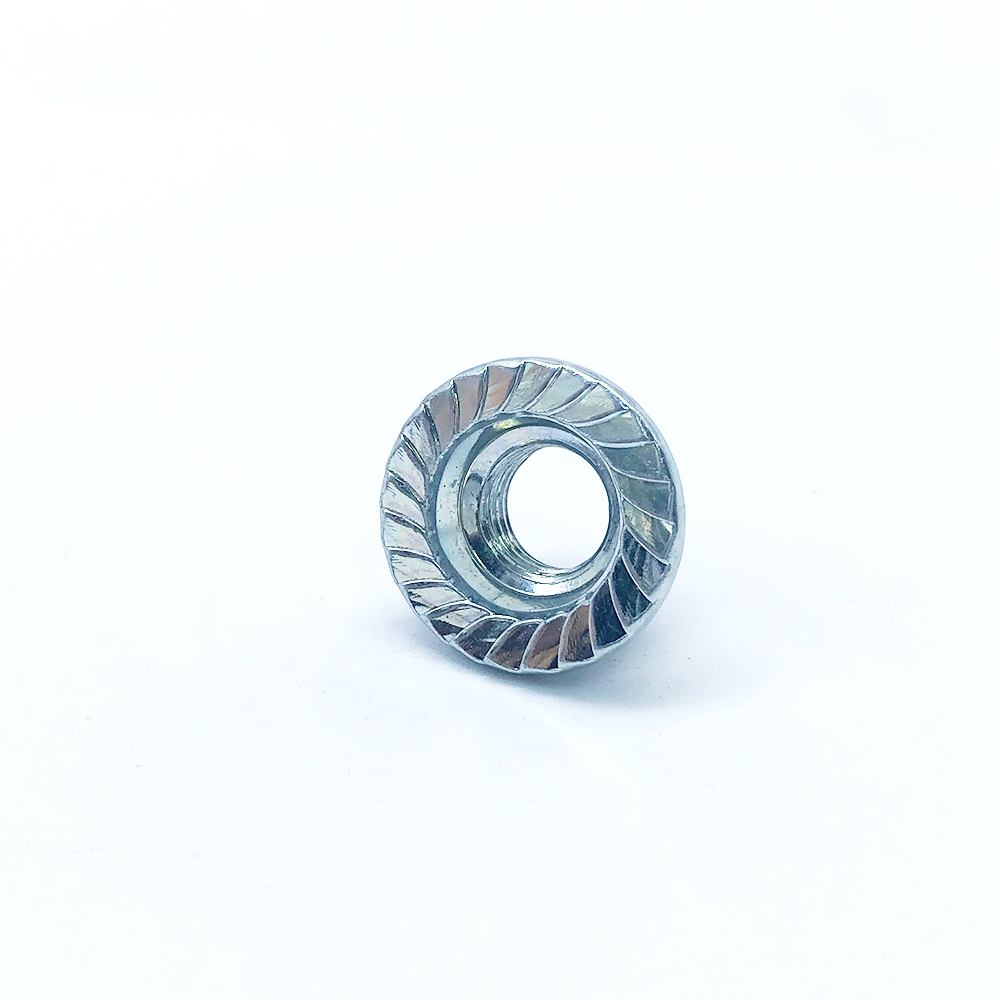
A hexagonal nut with flange, also known as a flanged hex nut, is a type of nut that has an integrated, wide flange at one end. This flange acts as a built-in washer, distributing the load over a larger surface area, which helps to reduce stress and prevent damage to the surface of the material being fastened. This design also improves the nut's resistance to loosening under vibration.
Finish: Zinc plating for rust prevention and environmental protection (Salt spray test for 72 hours)

Key Features:
Hexagonal Shape: The six-sided shape allows for easy use with standard wrenches and sockets.
Integrated Flange: The flange acts as a washer, spreading the load across a larger area, reducing the risk of indentation or damage to softer materials.
Anti-Loosening Variants: Some flanged hex nuts have serrations on the flange (serrated flange nuts), which bite into the surface material to prevent loosening due to vibration.
Common Uses:
Automotive Applications: Widely used in engine parts, chassis, and suspension systems, where secure fastening is essential, and vibration resistance is beneficial.
Industrial Machinery: Common in machinery that experiences vibrations, such as compressors or generators, where the flanged design adds stability and keeps the nut from loosening.
Construction and Structural Applications: Used in structural connections, as the flange distributes pressure more evenly, providing added security and stability.
Household Appliances: Frequently used in products like washing machines, dryers, and other appliances that may undergo vibration or repetitive movement.
Advantages:
Load Distribution: The flange spreads the load, reducing stress on the material and helping to prevent surface damage.
Ease of Installation: Eliminates the need for a separate washer, simplifying installation and reducing the number of parts.
Vibration Resistance: Serrated flange nuts offer added security in high-vibration environments, reducing the risk of loosening over time.